Proactive TIF risk management for better patient outcomes

Reduce Avoidable Hospitalizations with Mosai Pulse

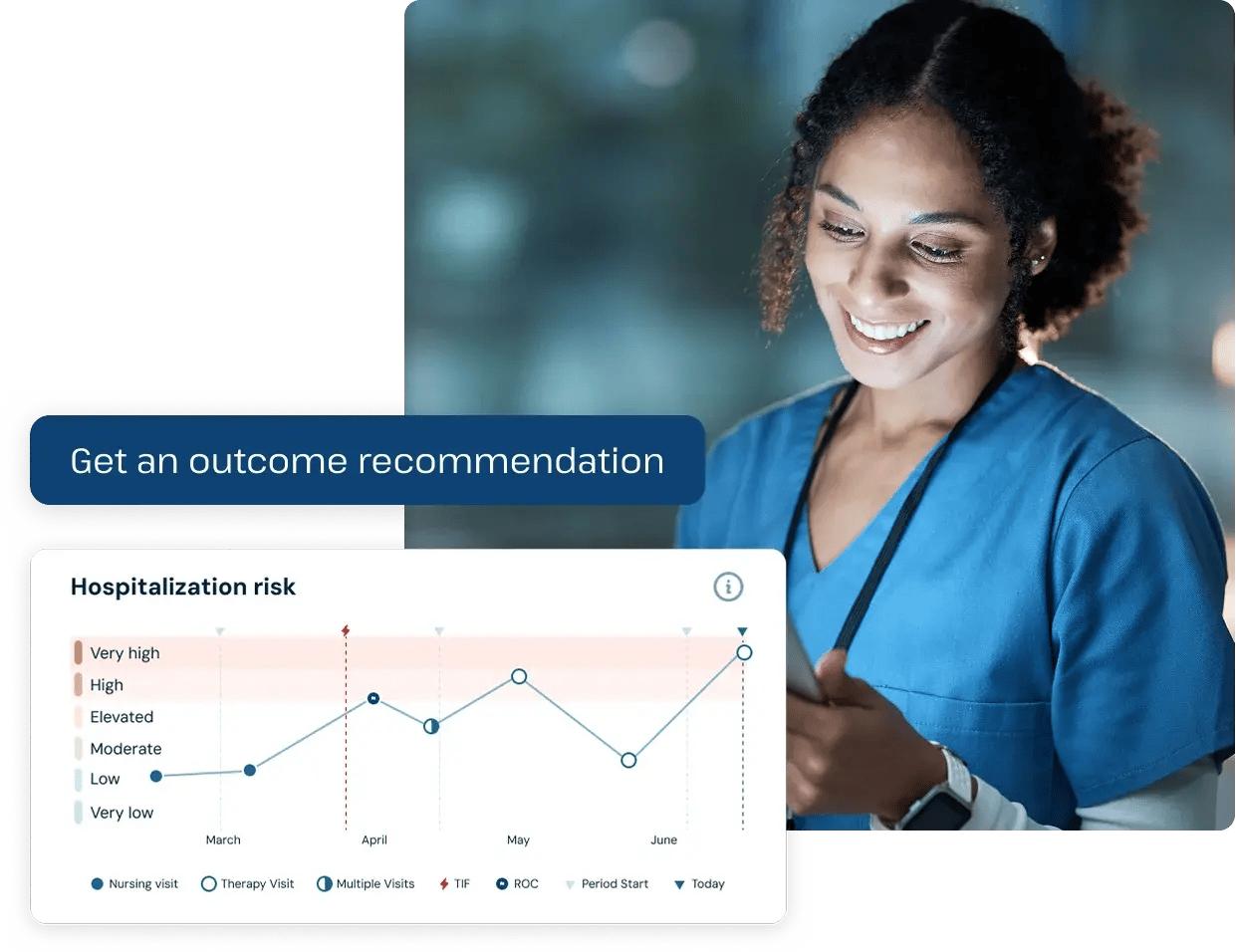
Managing transfer to inpatient facility (TIF) risk is critical to patient safety and your agency's financial health. Mosai Pulse delivers visit-by-visit predictive analytics and end-of-episode planning tools that help clinicians identify at-risk patients early, make confident recertification decisions, and reduce preventable readmissions.

 

Pulse - UI composite - hero
  • Identify high-risk patients before discharge
  • AI-powered recertification recommendations
  • Average 6% reduction in post-discharge hospitalizations
  • Identify high-risk patients before discharge
  • AI-powered recertification recommendations
  • Average 6% reduction in post-discharge hospitalizations

Reduce Hospitalizations with Mosai Pulse TIF Risk Management

Managing transfer to inpatient facility (TIF) risk is critical to patient outcomes and your bottom line. Mosai Pulse uses AI-powered visit-to-visit analytics and end-of-episode planning to help clinicians identify high-risk patients, optimize recertification decisions, and reduce avoidable readmissions.

Discover how home health and hospice providers are achieving a 6% reduction in post-discharge hospitalizations, improving Star Ratings, and capturing $1,980 in additional revenue per clinically appropriate recertification episode.

The Challenge of Managing TIF Risk

Home health providers face mounting pressure to prevent avoidable hospitalizations while maintaining quality care. The stakes are high, and the data tells a clear story.

light gradient 2

6.2% of patients discharged to community have high TIF risk


Why this matters: These patients face potential hospitalization within 30 days, threatening outcomes, satisfaction, and reimbursement.

light gradient 1

1 in 3 very high-risk patients will be hospitalized in 30 days


Why this matters: Without early identification and intervention, readmissions erode Star Ratings and HHVBP scores.

light gradient 4

$1,980 average revenue lost per missed recertification opportunity


Why this matters: Discharging clinically appropriate recertification candidates impacts both patient outcomes and agency revenue.

The patients most likely to be hospitalized are already in your census. The question is whether you can see them. 

There's a risk building in your census right now that doesn't show up in your EHR. Transfer to inpatient facility (TIF) risk grows visit by visit — and without near real-time visibility, high-risk patients get discharged too soon or recertified too late. The cost shows up in your Star Ratings, your HHVBP scores, and your bottom line. 

Take 2 minutes to see what your agency's TIF exposure looks like right now.

Answer 4 quick questions and get a personalized view of your agency's TIF exposure, revenue risk, and where Mosai Pulse can make the biggest impact.  

Step 1 of 4
What is your agency's average daily census?
Select the range that best reflects your current active patient volume.
<300ADC
300–500ADC
500–1,000ADC
1,000–2,500ADC
2,500+ADC
Step 2 of 4
What type of care does your agency provide?
Home Health
Hospice
Both
Step 3 of 4
How does your team currently identify patients at risk of hospitalization?
Be candid — this directly shapes your risk exposure score.
Clinician judgment onlyNo dedicated tools
Basic EHR alertsLimited automation
Some analytics toolsPartial visibility
Full predictive platformVisit-by-visit scoring
Step 4 of 4
What percentage of your episodes end in discharge?
Drag to match your agency's approximate discharge rate.
55% discharged
10% — mostly recertifying90% — mostly discharging
Estimated 14-day TIF exposure
Estimated patient breakdown by Mosai Pulse risk level
Patients who will TIF in 14 days
Monthly revenue at risk
from missed recertifications
8.2%
avg TIF reduction with Mosai Pulse
What Mosai Pulse shows your team — updated every 4 hours
Pulse ▾
Last refreshed 3 hrs ago
TIF Risk
Patient Name
Days into Ep.
Days Since Visit
Primary Diagnosis
Key insights based on your inputs

See your real patient risk list

Mosai Pulse scores every patient Very High through Very Low — refreshed every 4 hours — so your team intervenes before a hospitalization happens, not after. Agencies using Pulse see an average 8.2% reduction in unwanted hospitalizations.

TIF risk definitions reflect population-level probabilities from Mosai Pulse data science models: Very High = 1 in 4 patients (25%) will TIF within 14 days · High = 1 in 6 (17%) · Elevated = 1 in 10 (10%). Definitions may update with Pulse model refits and will be noted in release notes.

Proactive TIF Risk Management Throughout the Episode

Mosai Pulse helps clinicians identify and address transfer to inpatient facility (TIF) risk at every stage of care — turning visit-level insights into actionable decisions that reduce avoidable hospitalizations and improve patient outcomes.


See Pulse in Action

light gradient 2

At Intake

Identify baseline TIF risk early with AI-powered analysis of clinical assessments, medication history, and social determinants of health to inform care planning from day one.

light gradient 1

During Care

Monitor changes in vital signs, medication adherence, and behavioral patterns visit-to-visit to detect emerging risks and intervene before conditions escalate.

light gradient 4

Across the Episode

Track patient trajectory and TIF risk trends over time to optimize visit utilization, coordinate care teams, and maintain quality outcomes.

card gradient 4

At End-of-Episode Planning

Make confident recertification or discharge decisions with data-driven recommendations that reduce potentially preventable readmissions and protect revenue.

How Mosai Pulse Reduces TIF Risk

AI-powered insights that help clinicians identify and prevent avoidable hospitalizations


icon (1)

Identify high-risk patients before discharge

Pulse analyzes clinical assessments, medication history, and social determinants of health to flag patients at very high or high risk of hospitalization in the next 30 days. Clinicians receive clear recertification or discharge recommendations at the end of each episode, enabling proactive intervention when it matters most.

icon

Monitor patient condition visit to visit

Pulse continuously tracks vital signs, medication adherence, and behavioral changes across every visit. By detecting patterns and deviations early, care teams can adjust care plans in real time, coordinate resources, and reduce the likelihood of avoidable transfers to inpatient facilities.


icon (2)

Improve outcomes and capture appropriate revenue

Providers using Pulse see an average 6% reduction in post-discharge hospitalizations and improved Star Ratings by lowering Potentially Preventable Readmissions. Clinically appropriate recertifications also generate an average of $1,980 per episode, supporting both quality and financial performance.

See Pulse in Action Across Your Workflows

Predictive Insights Where You Need Them

Pulse delivers TIF risk scores and recertification recommendations directly in your workflow—from visit-level analytics to end-of-episode planning—so clinicians can act on insights immediately.

Referrals and admissions

Capture and prioritize referrals with AI-powered summaries, automated EHR syncing, and configurable business rules to accelerate patient onboarding.

Clinical management

Leverage near real-time predictive analytics to identify TIF risk, optimize visit utilization, and make proactive recertification or discharge decisions.

Networked care

Coordinate orders and care plans securely across providers, physicians, and payers with unified dashboards and order tracking.