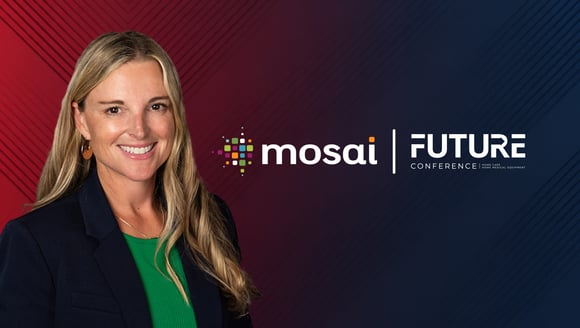

I recently joined Amy Hirsch and Joe Zazworsky, both Directors of Clinical Practice at BAYADA, on stage at the Home Healthcare News FUTURE Conference in Austin for a session called "From Skepticism to Buy-In." The premise was uncomfortable for someone who works for a technology company to sit with: AI adoption in home-based care doesn't rise or fall on the tool. It rises or falls on whether clinicians trust it enough to use it. By the end of the session, it was clear that the conversation about the technology and the conversation about trust aren't actually two conversations — they're the same one.
A few themes kept surfacing, and I left the stage more convinced than ever that the technology itself is rarely the hard part.
Success requires consistency.
It's not about clinicians refusing outright; it's about everyday use instead of treating the tool as a nice-to-have supplement. When AI is built into daily workflow, not layered on top of it, adoption sticks. That's why AI-supported clinical solutions only succeed when they're actively supported at every level of an organization, from executives to the clinician standing in a patient's living room. Leaders have to visibly believe in the tool before clinicians ever will.
The real variable isn't the software.
It's leadership engagement paired with process clarity. When a leader kicks off a rollout with genuine energy, sets clear expectations, and holds people accountable, clinicians notice immediately. Pair that with a streamlined SOP (everyone knowing who decides what, and when), and adoption moves faster.
Watch for the all-or-nothing trap.
When leaders lean too hard on metrics, they can swing into an "always follow the tool" or "don't use it" trap — and both erode trust. Questioning clinicians for not following a recommendation to the letter signals you trust the product more than the people using it, which is backwards! Clinical products have to be created, vetted, delivered, and adopted at the clinical level, which means clinicians need room to apply clinical judgment, not just comply. A recommendation is there to support the conversation around a decision, not replace it: clinical AI solutions should never stand in for clinical judgment. Leaders need to protect that judgment while promoting AI tools as something that enhances and facilitates evidence-based discussion. The other trap is slow-rolling implementation instead of treating go-live like a real go-live, the way you would with an EMR.
Listening has to be a loop, not a survey.
Our implementations typically run 8–10 weeks with a weekly call, and the clients who succeed build their own internal support alongside ours: a Teams channel, a regular meeting, a point person, or a designated superuser. Feedback must reach product and data science and actually show up in what gets prioritized. Clinicians can tell the difference between being heard and being humored. This matters long after launch, too: for AI solutions to keep benefiting patients, they have to evolve alongside compliance standards, regulations, and payer requirements. The loop has to run continuously, not just during rollout.
My advice for Monday morning:
Get behind the product yourself. Kick off with real energy. Put crystal-clear, written expectations in front of your team, with accountability attached. Build internal support beyond your vendor. And use the product yourself, every day, for 30 days. Clinicians notice when leadership asks something of them it hasn't tried itself.
Stepping back, home health, hospice and palliative care organizations are facing a sourcing problem on top of the adoption problem - more point solutions than any organization can realistically vet without creating redundancy. Figuring out what's actually needed, which vendor fits, and how to avoid stacking redundant tools has become one of the most time-consuming challenges HH and HPC leaders face, part of why Mosai exists: to support the full patient journey instead of adding one more disconnected tool to the pile.
Sharing the stage with BAYADA was a good reminder that the technology conversation and the trust conversation are the same conversation. Get the second one right, and adoption follows.
If your team is thinking through its own AI adoption strategy, we'd love to show you how Mosai supports providers through every stage of that journey. Request a demo to see it in action.